
What is the verification bottleneck in modern software engineering?
The verification bottleneck is the widening structural mismatch between the speed at which artificial intelligence models generate source code and the speed at which human engineers can read, comprehend, and verify that code. In 2026, autonomous tools, IDE extensions, and command-line agents allow developers to generate hundreds of lines of complex logic in seconds. However, the cognitive effort required to inspect edge cases, assess security boundaries, and preserve architectural coherence remains fundamentally fixed and linear.
Because software organizations have rewarded raw output volume without expanding verification capacity, production repositories are experiencing a wave of technical debt characterized by three primary symptoms:
Code churn rates have risen by more than 40 percent across repositories with heavy AI tool usage, meaning code is rewritten or deleted within fourteen days of merging.
Logic duplication has exploded because generating custom thirty-line helper functions is faster than searching for existing modular utilities.
Senior code reviewers are experiencing severe cognitive fatigue, leading to superficial approvals of large pull requests that introduce subtle regressions.
The illusion of 10x engineering velocity
Between 2023 and 2025, technology companies celebrated massive productivity gains driven by AI code assistants. Engineering dashboards showed glowing numbers: pull requests opened per sprint increased by 35 percent, tickets moved across Kanban boards faster than ever, and boilerplate setup times collapsed from days to minutes.
By late 2026, the long-term bill for that velocity has arrived. Software engineering empirical research presented at the 48th International Conference on Software Engineering (ICSE 2026) and industry studies from static analysis firms like SonarSource indicate that developer velocity metrics suffered from a fundamental measurement error. Teams measured code creation speed while ignoring code verification cost.
Writing software manually is an inherently slow physical activity, but that physical friction serves an essential cognitive function. When an engineer writes code by hand, their brain continuously runs a mental simulation of the system: What happens if this database connection drops? How does this object interact with the caching layer? Is there an existing utility function in our shared directory that already handles this data transformation?
When an AI agent generates fifty lines of code from a natural language prompt, that mental simulation never occurs. The developer's cognitive role shifts abruptly from author to proofreader. Cognitive psychology has proven across decades of literature that human beings are far worse at spotting errors in existing text than they are at thinking critically during the act of composition. When reading plausible, well-formatted code that looks correct at a glance, the human brain tends to assume correctness, gloss over subtle boundary errors, and approve the pull request.
The anatomy of AI technical debt: four systemic failures
1. The logic duplication trap
Before the widespread adoption of AI coding assistants, the primary constraint on developers was typing effort. Because writing code by hand took time, developers actively looked for ways to reuse existing abstractions. If a function already parsed telephone numbers, validated JWT payloads, or formatted currency, an engineer would find it and import it.
With AI agents in every IDE, generating thirty lines of custom code is faster than opening a shared utility folder and searching through existing files. An engineer simply prompts the assistant: "Write a function that validates our customer phone input." The assistant writes the function immediately, placed directly inside the local file.
Across a team of twenty engineers over six months, this behavior generates dozens of slightly divergent implementations of the same business logic. One implementation handles international dialing codes; another ignores spaces; a third crashes on null inputs. When business requirements change, updating the logic becomes a nightmare because the codebase lacks a single source of truth.
2. Phantom dependencies and security supply-chain risks
Generative models are trained on vast corpora of open-source software, including millions of outdated or abandoned packages. When an assistant suggests an import statement to solve a specific problem, developers routinely accept the suggestion without auditing the package's maintenance status, license, or security record.
In 2026, engineering teams face significant dependency bloat. Repositories carry dozens of transitive libraries that do little more than pad package lockfiles. Even worse, threat actors have begun exploiting model hallucinations by publishing malicious packages on registries like npm and PyPI that match names commonly hallucinated by language models. When an unvigilant developer accepts a hallucinated import and runs the install command, the vulnerability enters the corporate build pipeline.
3. The vanity metric of superficial test coverage
One of the easiest tasks to delegate to an AI model is unit test generation. As a result, many engineering teams in 2026 boast test coverage figures above 90 percent. Yet these same teams report higher rates of production incidents.
The explanation lies in how AI models construct tests. Unless guided by strict behavioral specifications, language models write tests that mirror the implementation rather than verifying the business requirements. If a function contains an off-by-one error or fails to handle a null database response, the AI-generated test often mocks the database call to return expected mock data and asserts that the flawed function behaves exactly as it was coded. The test suite passes cleanly, giving leadership false confidence while doing nothing to prevent regressions.
4. Senior reviewer burnout and the rubber-stamp culture
The verification bottleneck concentrates risk directly onto senior engineers, tech leads, and principal architects. Junior and mid-level developers can now produce three to four massive pull requests each day. A pull request that previously spanned 150 lines now regularly spans 800 to 1,200 lines because the developer included AI-generated boilerplate, extensive mock data, and sprawling helper functions.
Reviewing 1,000 lines of unfamiliar code thoroughly requires at least two hours of deep cognitive focus. When a senior engineer faces four such pull requests in their review queue every morning, alongside their own architectural tasks, thorough review becomes mathematically impossible. Reviewers begin scanning for surface formatting, verifying that the automated CI check is green, and clicking approve. The code enters staging, passes shallow integration checks, and breaks under production load.
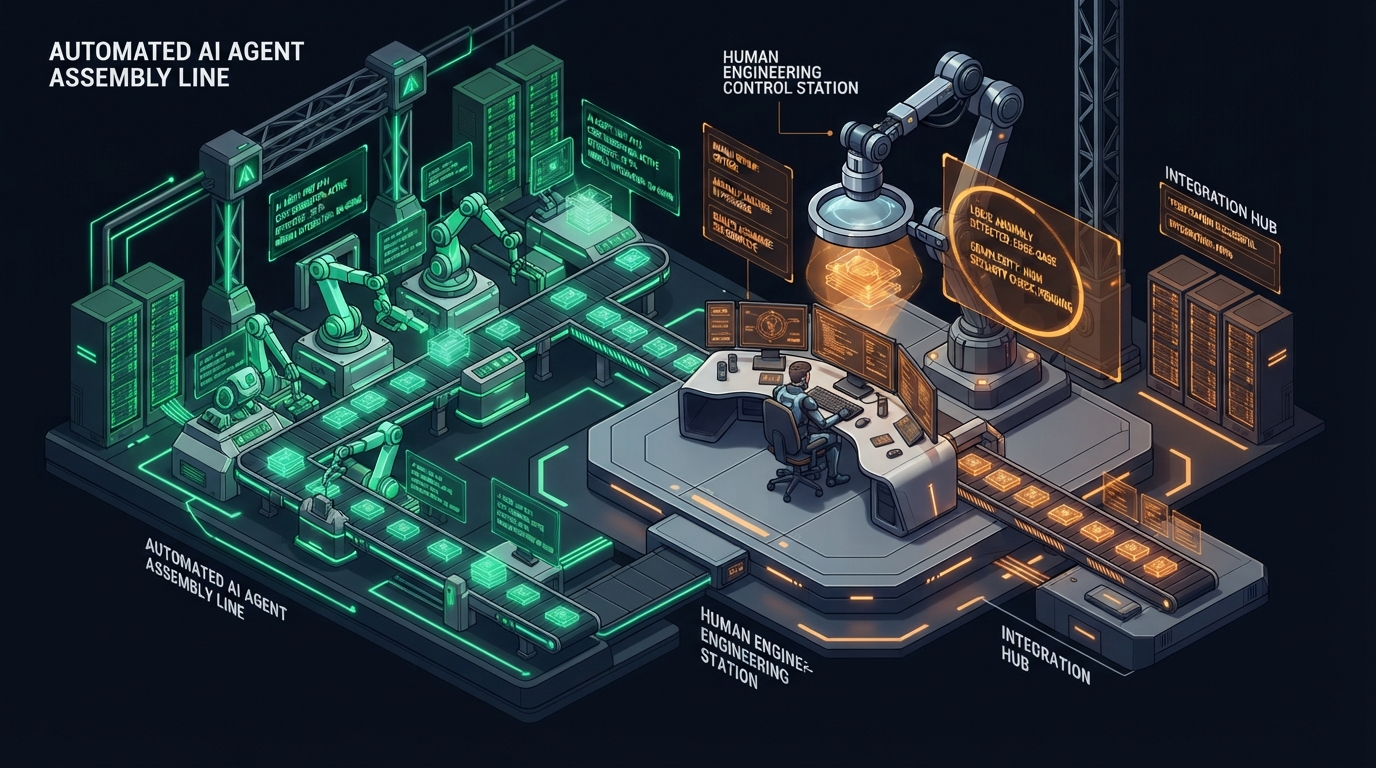
Dimensional breakdown: traditional technical debt vs. AI technical debt
To address this problem effectively, engineering leadership must recognize that AI technical debt behaves differently from legacy technical debt.
Dimension | Traditional Technical Debt (Pre-2023) | AI-Generated Technical Debt (2026) |
|---|---|---|
Root Cause | Rushed deadlines, deliberate engineering shortcuts, missing documentation. | Verification fatigue, boilerplate sprawl, human inability to proofread high-volume generated code. |
Accumulation Rate | Linear and gradual; builds up over quarters as projects age. | Exponential; can inundate an active codebase within weeks across all team members. |
Code Style | Terse, idiosyncratic, undocumented custom shorthand. | Clean-looking, verbose, plausible code packed with boilerplate and redundant helpers. |
Test Suites | Low test coverage; missing tests for critical paths. | High coverage numbers that mock internal logic and test implementation rather than business rules. |
Remediation | Writing missing documentation, adding tests, refactoring monoliths. | Aggressive code deletion, enforcing strict pull request line caps, automated mutation testing. |
Real-world case studies: how the bottleneck manifests
Case Study 1: The e-commerce cart refactor
A mid-sized B2B e-commerce platform tasked a developer with refactoring their cart calculation engine to support regional tax rules. Using a terminal-based coding assistant, the developer generated 750 lines of TypeScript covering tax calculations, discount codes, and currency formatting in under an hour. The unit tests generated by the assistant passed cleanly.
The code reviewer, facing a heavy backlog, verified that the test suite passed, scanned the type definitions, and approved the pull request. In production, enterprise clients reported that carts with more than twenty items took six seconds to calculate. The AI model had generated an nested loop that queried the database inside an array iteration for every single cart item instead of batching the query. Because the generated unit tests used an in-memory mock with two items, the quadratic performance regression was invisible until real production data hit the service.
Case Study 2: The duplicate authentication middleware
In a SaaS company managing thirty microservices, developers used AI assistants to spin up new REST endpoints quickly. Over four months, three different developers building separate endpoints prompted their assistants to handle Bearer token verification. Instead of importing the company's shared auth package, each developer accepted a custom thirty-line JWT verification function generated inline by the model.
When the security team issued an update requiring token revocation checks against a Redis blacklist, they updated the shared auth package and assumed all endpoints were protected. Because six critical endpoints were using isolated, AI-generated inline validation routines, those endpoints remained vulnerable to revoked tokens for three weeks before a security audit detected the gap.
Engineering countermeasures: how high-performing teams adapt
Teams that successfully navigate the AI era do not ban AI coding assistants. Prohibiting these tools is unrealistic and deprives engineers of genuine productivity advantages in prototyping and documentation. Instead, mature organizations restructure their development workflows around verification guards.
1. Enforce hard limits on pull request sizes
The single most impactful rule an engineering team can implement is a strict cap on pull request sizes. When pull requests exceed 300 lines of code, reviewer comprehension drops off a cliff. Leading engineering organizations now enforce automated CI checks that reject pull requests exceeding 250 changed lines (excluding lockfiles and static assets).
When developers cannot dump an entire multi-file generation into a single review, they are forced to break their work into discrete, modular commits. A reviewer can inspect fifty to one hundred lines of code thoroughly in ten minutes, spotting logic flaws, unneeded dependencies, and missing abstractions.
2. Implement automated mutation testing
To eliminate the illusion of vanity test coverage, engineering teams are incorporating mutation testing tools into their CI/CD pipelines. Tools such as Stryker for TypeScript and JavaScript or Mutmut for Python test the validity of your test suite by making small, deliberate alterations to your source code (called mutants) and verifying whether your tests catch the breakage.
If a mutation changes an arithmetic operator or removes a conditional check and the test suite still passes, the mutant survives, indicating that the test is superficial. Enforcing a minimum mutation score forces developers to write meaningful tests that assert system behavior rather than simply approving AI-generated test scaffolding.
3. Embrace modular monoliths over microservice sprawl
When a codebase is split into dozens of microservices, AI assistants lack the broad contextual awareness needed to understand distributed side effects. When code is tightly coupled, an AI edit in one service often breaks an unstated assumption in another.
Teams are increasingly organizing applications into modular monoliths. In a modular monolith, all code resides in a unified repository with strictly enforced module boundaries. Each module exposes a clean public interface while keeping internal data models private. Developers can use AI agents freely within the boundaries of a single module without risking cross-system regressions.
4. Reward code deletion over code creation
Traditional engineering cultures often celebrated lines of code written or the sheer number of features delivered. In the AI era, code generation is trivial; code maintenance is the bottleneck.
Engineering managers must actively celebrate net negative code commits. Recognizing engineers who delete 500 lines of redundant boilerplate, consolidate duplicate helper functions into a single shared utility, or replace a third-party dependency with a standard language feature aligns team incentives with long-term codebase health.
Frequently asked questions (FAQ) for search and answer engines
Does AI-generated code contain more bugs than human-written code?
AI-generated code does not necessarily contain more immediate syntax errors. However, it introduces more structural bugs and architectural debt because the models generate code without full awareness of global system boundaries, project history, or domain-specific constraints. The 41 percent increase in code churn observed in 2026 reflects these architectural misalignments.
What is the recommended pull request size limit when using AI coding assistants?
The industry consensus among engineering leaders is to cap pull requests at 200 to 250 lines of changed code (excluding package lockfiles and generated documentation). Keeping pull requests small ensures that human reviewers can read every line critically within fifteen minutes, preventing review fatigue.
How does mutation testing help identify flawed AI-generated tests?
Mutation testing automatically introduces small faults into your source code (such as changing arithmetic operations or inverting boolean conditions) and executes your test suite. If the test suite continues to pass despite the code being intentionally broken, the test is superficial. This exposes tests that merely execute code lines without validating actual business rules.
Why are software teams shifting from microservices back to modular monoliths?
Microservices introduce distributed network latency, deployment overhead, and fragmented context that language models struggle to navigate. A modular monolith provides strong encapsulation and well-defined module boundaries within a single repository, making it easier for human engineers and AI assistants to reason about code safety without distributed complexity.
How can engineering managers measure code quality rather than raw AI output?
Managers should replace output volume metrics (such as lines of code or ticket velocity) with stability and maintainability metrics. Key indicators include code churn rate (the percentage of code rewritten within fourteen days), pull request review turnaround time, production defect escape rate, and net code reduction.
Building sustainable software in the AI era
Artificial intelligence has permanently altered the economics of software development. Generating code is no longer the scarce resource in software engineering. The scarce resource is human discernment: understanding system architecture, verifying security guarantees, and maintaining code readability over years of production operation.
The engineering organizations that thrive over the next decade will not be the ones that push the highest volume of AI-generated code into their repositories. They will be the organizations that build rigorous verification pipelines, enforce disciplined review practices, and value clean, maintainable systems.
If you are looking to architect resilient web applications, optimize existing software infrastructure, or build custom automated business pipelines, connect with the engineering team at Buzzin Tech to turn your ideas into lasting impact.