
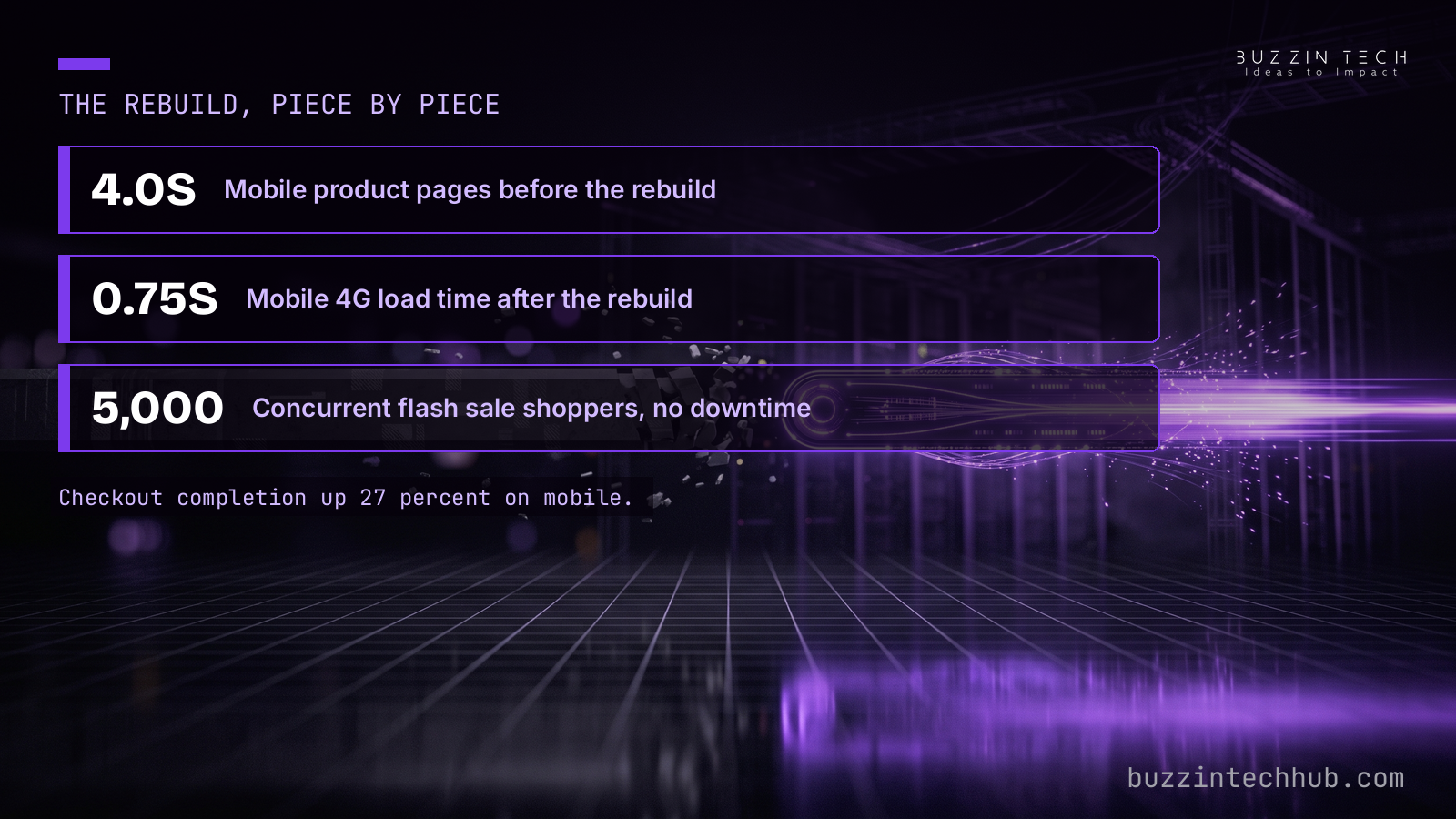
WooCommerce speed optimization decided whether Flash Deals Mart could sell during its own flash drops. Mobile product pages took 4 seconds to load, and traffic spikes crashed the shared hosting underneath them. We rebuilt the store for speed and tracking, and the numbers moved: 0.75 seconds on mobile 4G, 5,000 concurrent shoppers, no downtime.
TL;DR
- Flash Deals Mart runs thousands of flash promotions, and its store crashed on shared hosting when a drop went live.
- Mobile product pages took 4 seconds to load, and checkout conversion fell at the exact moment demand peaked.
- We moved the store to dedicated cloud, added Redis caching, and rebuilt filtering in vanilla JavaScript.
- Load time fell to 0.75 seconds on mobile 4G, the store held 5,000 concurrent shoppers, and mobile checkout completion rose 27 percent.
The problem: flash drops that crashed the store
Flash Deals Mart sells beauty, personal care, and lifestyle goods through thousands of daily flash promotions. A flash drop is the whole business model: a short window, a sharp price, and a crowd arriving at once. When the crowd arrived, the store went down. Shared hosting could not carry the spike, and the shoppers who did get in waited 4 seconds for a product page to load on mobile.
Four seconds is long enough to lose a sale twice over. The shopper waits, the page stalls, and the drop moves on without them. That is the kind of build our web development team takes on when the store itself is the bottleneck: the front door and the systems behind it, rebuilt together.
Why shared hosting and plugin weight broke first
Shared hosting splits one server among many sites, so a traffic spike on one store is a traffic spike the server never planned for. Flash Deals Mart sent its biggest crowds in minutes, not hours, and the shared server had no spare capacity to give. The crash was not a surprise. It was the plan running out of room.
The catalogue made it worse. Heavy WordPress plugins ran the filtering, and each filter click stacked queries the database had to answer from scratch. On a quiet afternoon the store coped. During a drop, every click joined a queue that was already full. Speed and scale failed together because the same two parts, hosting and filtering, carried both loads.
A flash drop gives the store minutes, not hours. Every second a product page takes to load is a share of that window spent waiting instead of buying. When the page finally loads and the filter stalls again, the shopper leaves with the drop still running. The store was not losing shoppers to a rival. It was losing them to its own load time.
The build: dedicated cloud, Redis, and vanilla JavaScript
The fix started underneath the store. We migrated Flash Deals Mart to a dedicated cloud architecture, so the traffic spikes had capacity reserved for them instead of borrowed from neighbours. Then we configured Redis object caching, which keeps the answers to repeated database queries in memory instead of asking the database again for every request.
The catalogue got the same treatment. We rebuilt the frontend filtering with lightweight vanilla JavaScript instead of the heavy WordPress plugins that ran it before. Fewer queries, less code to load, and a filter that answers on the shopper's device instead of waiting on the server. The same thinking shaped the custom Bank Alfalah gateway we built for Frisbo: when the ready-made parts cannot carry the load, build the part that can.
Dedicated cloud changes the question. The store no longer shares its processor and memory with neighbours it never met, so a crowd on Flash Deals Mart is a crowd the store planned for. Redis takes the repeated questions off the database, and the vanilla JavaScript filter takes the repeated work off the server. Each part of the build removes one queue the shopper used to wait in.
The tracking fix: server-side Meta CAPI and Google tagging
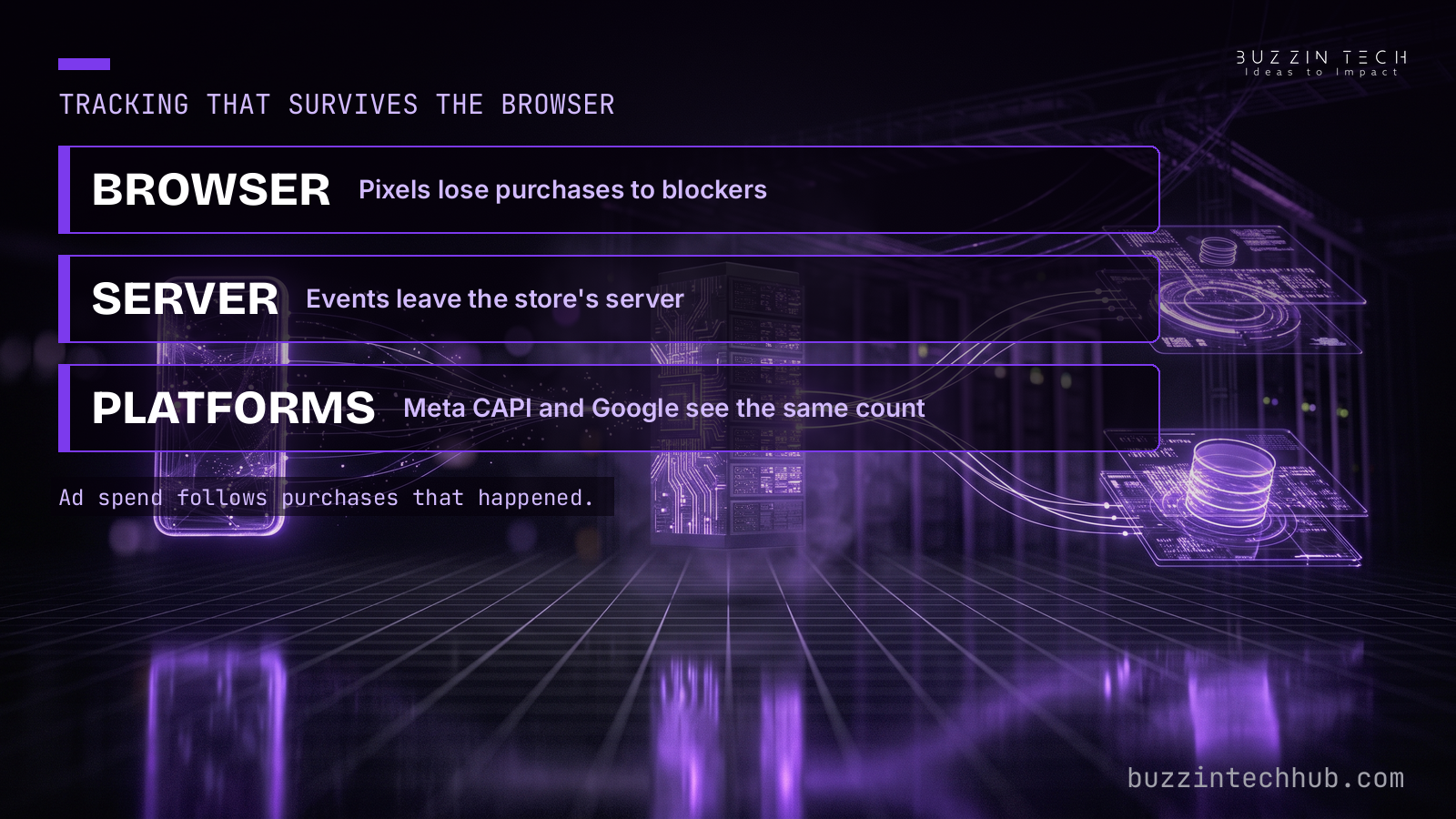
Speed fixed the store. Tracking fixed the numbers behind it. Browser-based pixels lose purchases to ad blockers and browser limits, so the store's own records and its ad platforms disagreed about what sold. We implemented Meta Conversion API (CAPI) and Google server-side tagging, so purchase events travel from the server to each platform instead of relying on the shopper's browser.
The change is quiet and it matters. When the platform sees the purchase the store actually took, the ad spend follows real buyers instead of guesses. Server-side tracking does not make a slow store fast. It makes a fast store measurable, and a measurable store is one the marketing can trust.
The gap between the two records costs money in both directions. When the platform undercounts purchases, it pulls budget from the campaigns that actually sell. When it overcounts, it feeds budget to campaigns that only look good. Server-side events give both sides the same count, so the next budget decision starts from the purchases the store really took.
What changed: 0.75 seconds, 5,000 shoppers, 27 percent
The published numbers tell the story in three parts. Page load speed dropped to 0.75 seconds on mobile 4G, down from 4 seconds. The store handled 5,000 concurrent flash sale shoppers without downtime. Mobile cart checkout completion increased 27 percent.
Each number answers a different question. Load time answers whether the shopper stays. Concurrency answers whether the store stands up when the drop goes live. Checkout completion answers whether the visit turns into a sale. A rebuild that moves all three is a rebuild that fixed the store, not one corner of it.
None of the three numbers stands alone. A fast page on a store that crashes still loses the sale. A store that stays up but loads slowly still loses the shopper. And a fast, stable store with broken tracking still spends its ad budget blind. The rebuild counts because all three moved at once.
How the build ran: four steps, in order
The project followed the method we use on every build. Discovery and architecture first: the traffic spikes were measured, the 4-second loads were traced to hosting and filtering, and the fix was planned as one build instead of two. Design and prototyping next: the cloud architecture and the rebuilt catalogue were shaped around the flash drop, not the quiet afternoon.
Engineering and build followed: the migration, the Redis caching, the vanilla JavaScript filtering, and the server-side tracking. Deployment and scaling last: the store moved to dedicated cloud, and the next drops proved the build under real load. The Flash Deals Mart build sits in our case study list alongside the other Friday builds, including the DCC Developers CRM, where two custom systems replaced manual tracking across a developer's portfolio.
Is your store slow when it matters most?
If your busiest hour is the one your store handles worst, the fix starts underneath it. See how we approach WooCommerce performance builds
Frequently asked questions
What did BuzzinTech build for Flash Deals Mart? We rebuilt the store for speed and scale. Flash Deals Mart moved to dedicated cloud architecture, Redis object caching was configured, and the frontend catalogue was rebuilt with lightweight vanilla JavaScript filtering instead of heavy WordPress plugins. We also added Meta Conversion API and Google server-side tagging so purchase attribution travels from the server. The stack is WooCommerce, Redis caching, and server-side tracking.
Why did the store crash during flash drops? The store ran on shared hosting, which splits one server among many sites and leaves no spare capacity for a sudden crowd. Flash drops send thousands of shoppers in minutes, and the shared server could not carry the spike. Heavy WordPress plugins made it worse: each filter click stacked database queries that had to be answered from scratch while the queue was already full.
What is Redis object caching, and what did it change? Redis keeps the answers to repeated database queries in memory, so the store serves them without asking the database again. On a catalogue with thousands of daily promotions, the same queries repeat constantly. Caching those answers takes the repeated work off the database, which is what lets the store answer 5,000 shoppers at once instead of queuing them.
Why rebuild the catalogue filter in vanilla JavaScript? The old filter ran on heavy WordPress plugins, which loaded extra code and sent every click back to the server as a fresh database query. The rebuilt filter uses lightweight vanilla JavaScript, so filtering happens on the shopper's device with fewer queries and less code to load. The result is a catalogue that stays fast while the crowd is at its largest.
What is server-side tracking, and why use Meta CAPI? Server-side tracking sends purchase events from the store's server to the ad platform instead of relying on the shopper's browser. Browser pixels lose events to ad blockers and browser limits, so the platform sees fewer purchases than the store took. Meta Conversion API and Google server-side tagging close that gap, so ad spend follows the purchases that actually happened.
What changed after the rebuild? Three published numbers. Page load fell from 4 seconds to 0.75 seconds on mobile 4G. The store handled 5,000 concurrent flash sale shoppers without downtime. Mobile cart checkout completion increased 27 percent. Load time, capacity, and conversion moved together, which is what a rebuild has to do to count as fixed.
More from Buzzin Tech Hub
- Bank Alfalah payment gateway, built for Frisbo fulfilment: a custom WooCommerce gateway with 3D Secure 2.0, HMAC-verified settlements, and orders routed to the nearest hub without manual steps.
- Real estate developer CRM: one view of every unit sold: how a custom CRM gave DCC Developers one view of every unit, payment, and pending instalment.
- Browse the full Buzzin Tech Hub blog